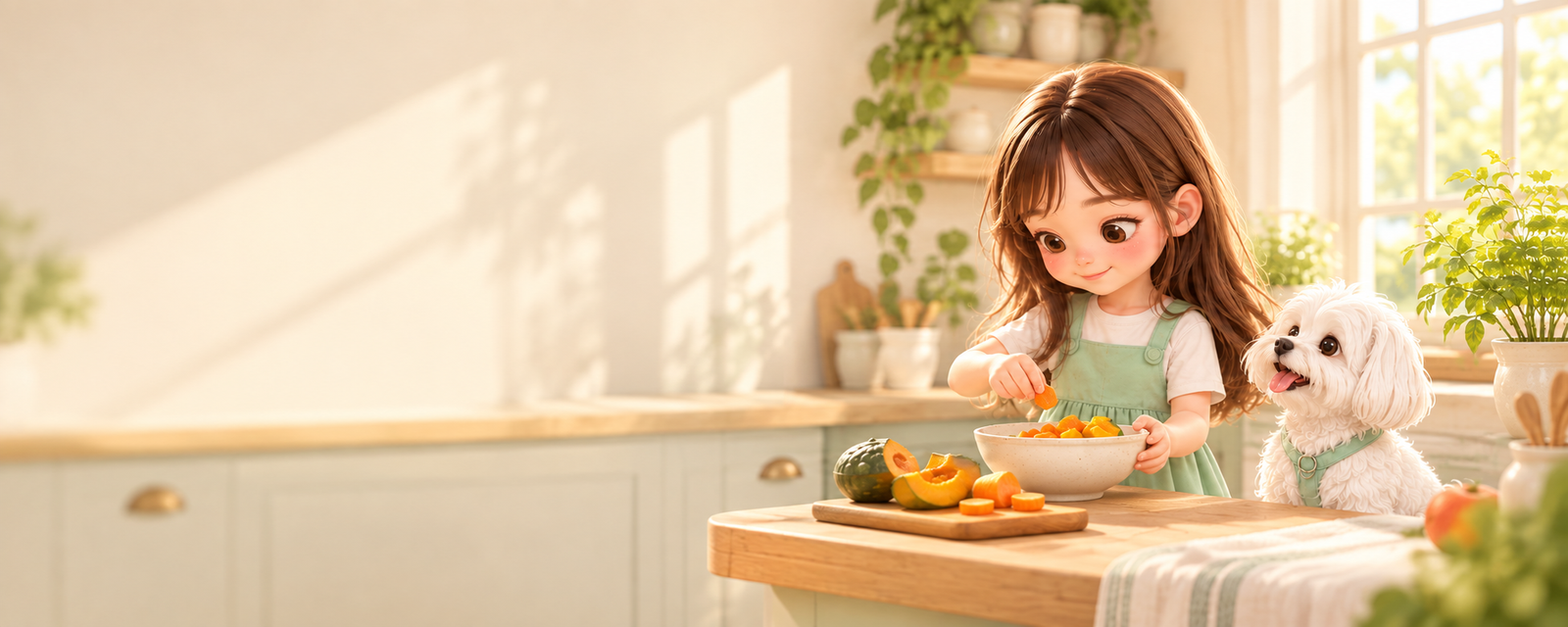
Can go with regular meals
Safe vegetables such as carrots and green beans can go with a dog's meal. Remove apple seeds and core; cook chicken and remove the bones. These foods cannot replace a complete diet.
Look up a food, then see how to prepare it. This page covers generally healthy adult dogs.
Safe vegetables such as carrots and green beans can go with a dog's meal. Remove apple seeds and core; cook chicken and remove the bones. These foods cannot replace a complete diet.
Do not feed grapes, raisins, onions and garlic, chocolate, or foods containing xylitol. If your dog eats any, call a vet immediately. Do not wait for symptoms or induce vomiting yourself.
Offer a tiny amount of any new food and watch your dog. Ask a vet first for puppies, older or ill dogs, or dogs on a prescription diet.
If a food is not listed, that does not mean it is safe. Ask a vet before feeding it.
47 common foods. Check how to prepare each one.
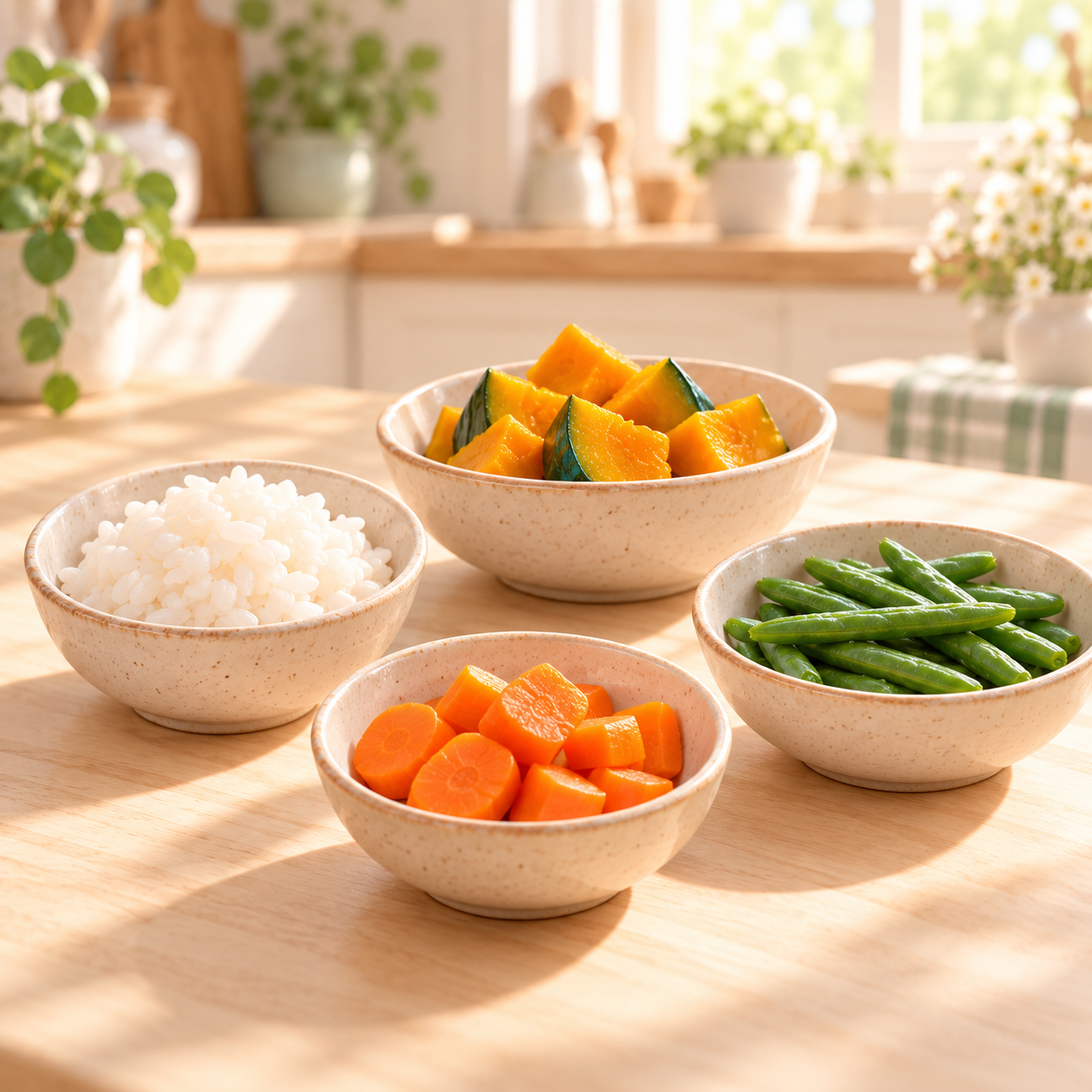
Vegetables can go with meals; cook rice, pasta, and potatoes.
Wash and cut into small pieces; raw or cooked is fine.
Wash and cut into small pieces; raw or cooked is fine. Do not add salt or butter.
Cook and cut into small pieces; offer a little. Too much may cause gas.
Offer only sweet, non-hot peppers. Remove stem and seeds; cut into small pieces.
Cook and offer a little; ask a vet first if your dog has a sensitive stomach.
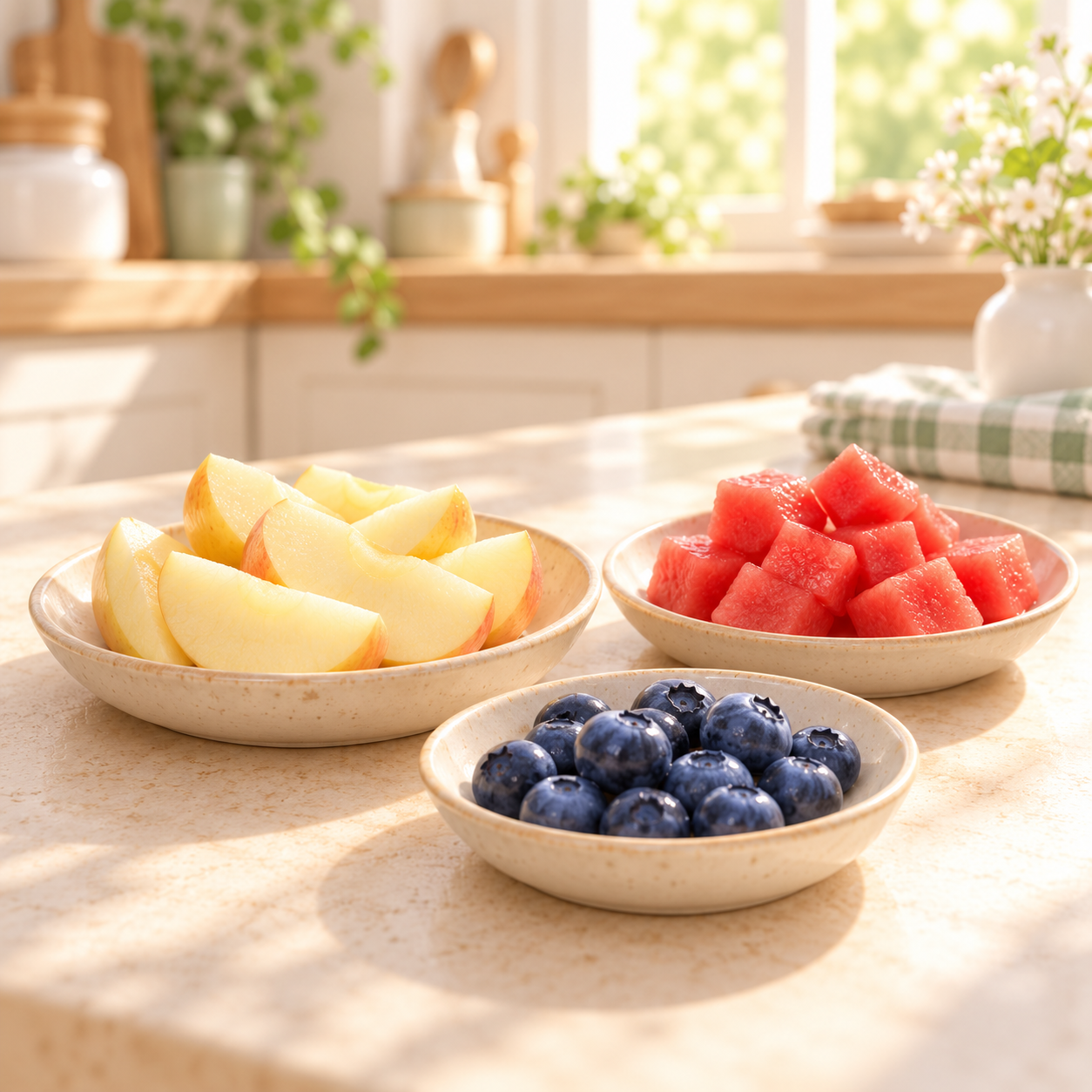
Check which skins, seeds, and pits need removing first.
Wash and offer a little. Cut into smaller pieces for small dogs if needed.
Wash, remove the stems, and cut into small pieces; offer a little.
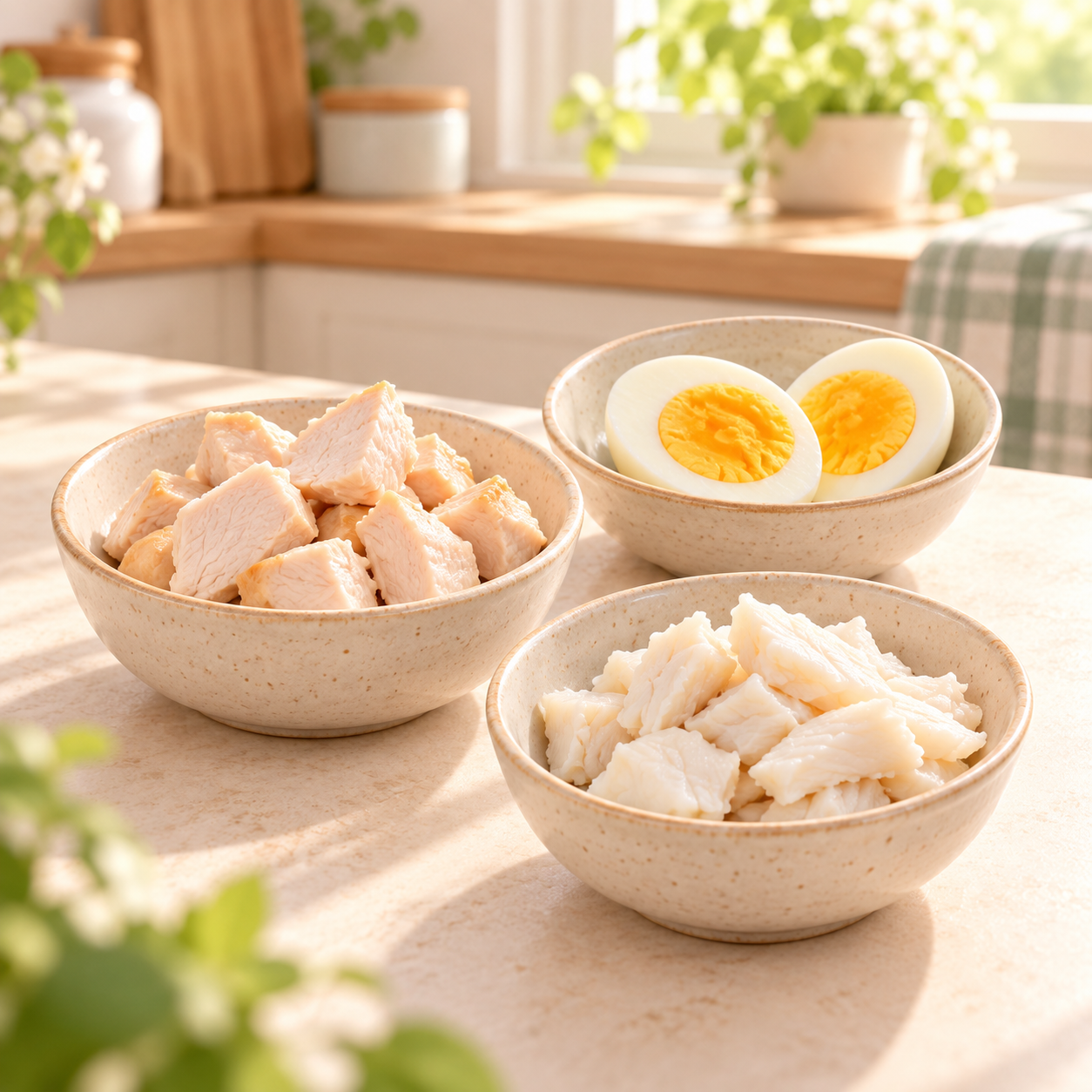
Cook thoroughly and remove bones; peel shrimp.
Offer a little. Choose canned sardines in water with no added salt; check for hard bones.
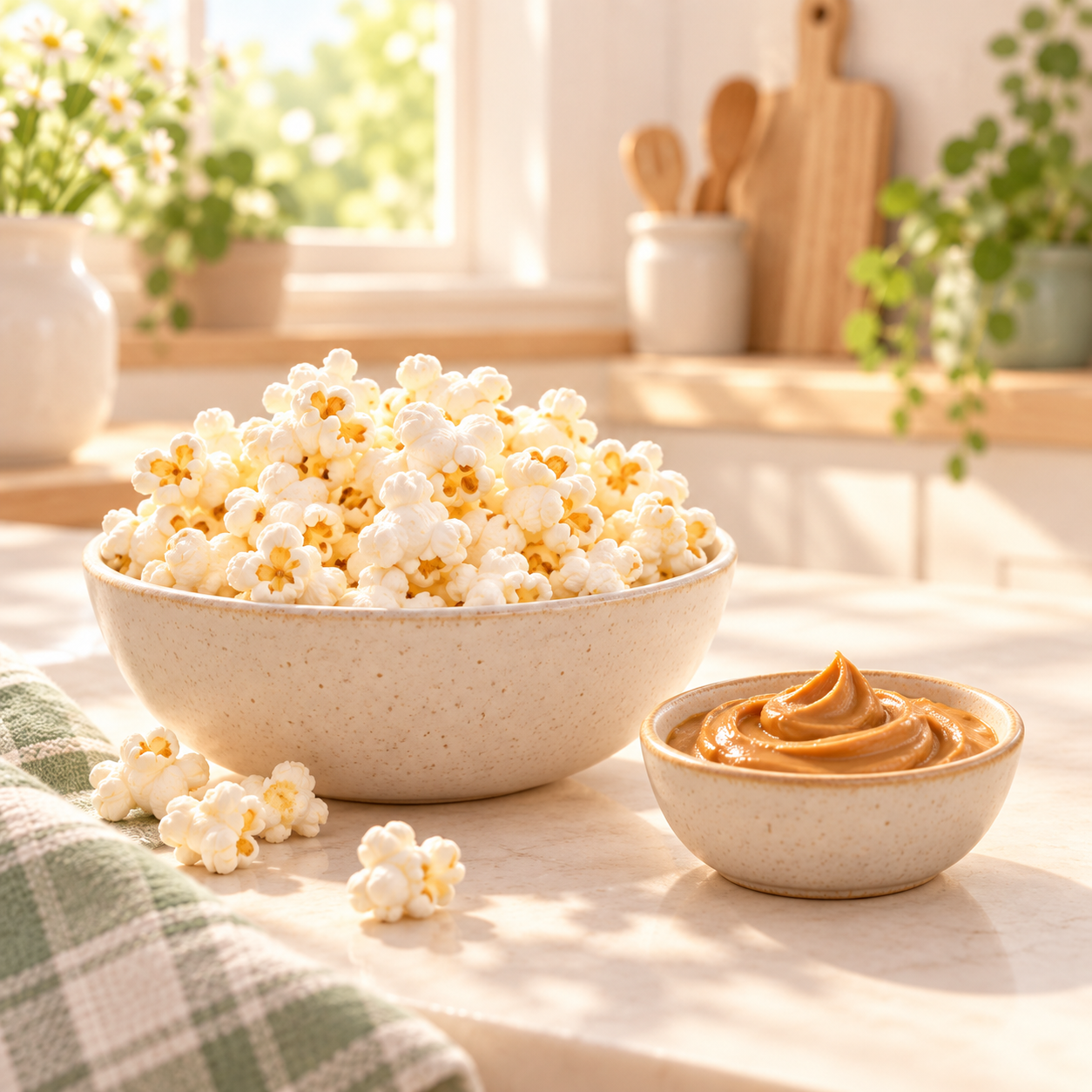
Check the ingredients first, then keep portions small.
Only air-popped popcorn without salt or butter; remove hard unpopped kernels.
Make sure it contains no xylitol or other sweeteners; try one small bite first.
Unsalted and shelled; offer a little. Do not give whole peanuts to dogs that may choke on them.
Some foods are toxic; others can cause choking or gut injuries.
May contain parasites or bacteria. Cook and remove bones.
Bacon, ham, and similar foods are usually too salty and fatty.
Some are poisonous. Do not let your dog eat them outdoors.
Do not feed green tomatoes, stems, or leaves.
Advice about the flesh varies, and the pit can cause a blockage. We do not recommend feeding it.
The answer can change with the part of the food and how it is prepared.
Advice about the flesh varies; the pit can cause a blockage. This page does not recommend feeding it.
Raw or cooked bones can cause choking and injure teeth or the gut. Raw bones also carry a risk of bacteria.
Some sources allow a little tuna canned in water occasionally, but mercury is a concern. This page does not list it as an everyday food.
Ask a vet before feeding spinach if your dog has kidney problems or stones. Do not let your dog eat wild mushrooms.
Safe vegetables can accompany regular meals in small amounts. Too much broccoli or similar vegetables may upset the stomach.
There is no one-size-fits-all portion. Start with a tiny bite; ask a vet if you want to add it to meals regularly.
Dogs need sodium, but complete dog food usually provides it, so you do not need to add salt. A little salt is not necessarily poisoning. Call a vet if your dog swallows a lot of salt or salt dough, or drinks a lot of seawater. Follow your vet's plan for dogs with heart disease.
This page brings together public veterinary and animal welfare sources. A vet has not reviewed every item individually. An unlisted food is not necessarily safe. Ask a vet if your dog is ill, on a prescription diet, or has eaten something dangerous.